
Sunrock, a leading pan-European solar energy developer, offers integrated clean energy solutions. What does this mean? As demand for clean energy rises, and grid congestion increases, our integrated systems meet the challenge by boosting the availability of clean local energy. We integrate battery systems to store excess solar energy from the roof for use during non-sunny periods, like EV fleet charging, and implement smart energy management systems for efficient, real-time energy flow. With these solutions, Sunrock tackles today’s energy challenges and paves the way for a sustainable, resilient tomorrow – committed to supporting net-zero carbon operations with customised, flexible solutions that drive long-term value for both real estate owners and tenants.
Addressing today’s energy challenges
As countries across Europe transition towards greater electrification and stricter environmental regulations, the demand for clean energy is soaring. Along with growing ESG ambitions, this shift is driven by the increasing adoption of electric vehicles (EVs) and the need to move away from traditional energy sources. This spike in energy demand is putting immense pressure on grid capacities, especially in countries like the Netherlands, and increasingly so in Germany and France. Sunrock’s clean energy solutions are here to tackle these issues head-on by promoting affordable, local clean energy consumption and ensuring a reliable and efficiently managed energy supply. These systems help logistical and industrial users reach their broader net-zero carbon goals in a cost-effective way. So, what exactly do they offer?
Integrated solar energy solutions
Whether for buildings under development or existing builds with limited grid access, Sunrock grants tenants greater access to clean, reliable energy, making the property more attractive and future-proof. For owners and developers having to develop properties without grid capacity, our solutions offer grid independence by powering operations locally. By supporting occupants with their energy needs, owners add even more value to their properties and attract a wider pool of tenants with strong sustainability ambitions.
Limited grid capacity is a major challenge, especially during times of high energy use. Battery Energy Storage Systems (BESS) store extra solar energy, providing a buffer to meet high-demand periods more efficiently. Even if there’s enough grid capacity, the integrated solutions help occupants use as much solar energy as possible, reducing reliance on the grid and lowering costs. For tenants who don’t need all their grid capacity now, but will in the future, Sunrock offers the ability to secure that capacity today, making sure it’s available when needed.
Sunrock offers a fully integrated clean energy system. In addition to rooftop solar, here’s what’s included:
- Battery Energy Storage System (BESS): Store surplus solar energy for use during peak demand periods or when solar production is low, ensuring a steady supply of clean energy.
- Dynamic EV Charging: Utilise locally produced solar energy to charge EV fleets efficiently, reducing dependency on the grid and optimising energy use based on real-time needs and market conditions.
- Smart Energy Management System (EMS): Connect and manage solar panels, batteries, and EV chargers to optimise energy flow, increase efficiency, and reduce costs.
- Guidance and Expertise: Sunrock offers comprehensive development and management of your energy system, providing expertise to help shape decisions for future energy ambitions.
“Local electricity consumption is increasing significantly due to electrification of fleets. Charging of the fleet often happens during nighttime when the sun does not shine, and in many cases the grid cannot foresee this demand. With our clean energy solutions, we enable the electrification of operations, and to become less dependent on the grid,” explains Tim de Vries, Head of Product NL.
Success story: Dorsten’s Positive Footprint Warehouse
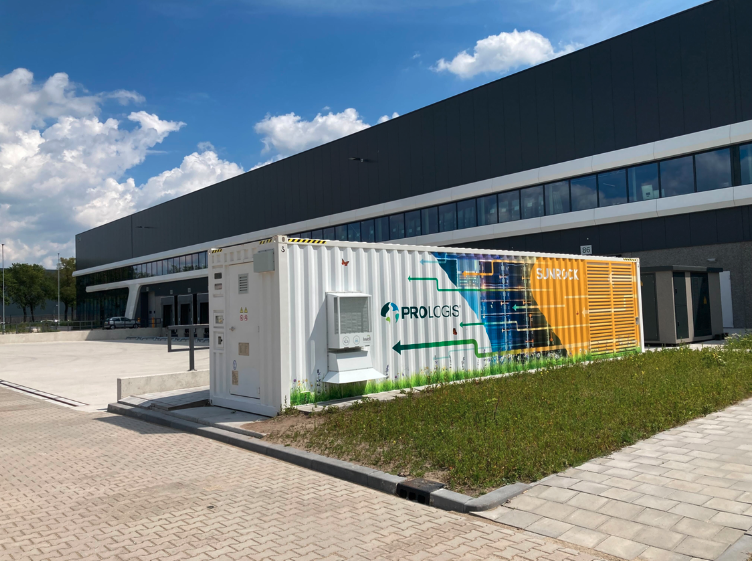
The “Positive Footprint Warehouse” in Dorsten, North Rhine-Westphalia, developed in partnership with Delta Development, showcases one of our integrated systems in action. This flagship project features a large-scale photovoltaic (PV) system with an output of 3.45 MWp and a 1,000 kWh battery system. The BESS stores excess solar energy, securing a consistent supply of clean energy and reducing CO2 emissions by over 1,300 tons annually. Aiming for climate neutrality by 2050, the Positive Footprint Warehouse shows how integrated solutions can achieve significant environmental benefits and optimise energy efficiency.
“We want to create for the user a maximum flow of renewable energy, but also an efficient flow of energy. So, we also are proud that we have a battery system in place which also gives our customer the possibility during the night to use renewable energy,” says Edwin Meijerink, Director at Delta Development
Empowering a clean energy future
As a major developer of solar rooftop projects, our vision is to become the leading provider of clean energy solutions across Europe. Together with our clients, we are in the business of doing good by transforming properties that generate clean energy locally, eliminating both grid dependencies and operations powered by dirty energy sources that contribute to climate change. With our solutions we are taking our mission of a clean energy future further than ever – by empowering users to optimise their energy usage with a fully integrated clean energy hub.
Get ready to meet your energy needs!
Want to learn more about Sunrock’s integrated energy solutions? Just reach out to our experts!
- Tim de Vries, Head of Product – t.devries@sunrock.com
- Daan Terlingen, Business Development Manager NL – d.terlingen@sunrock.com

Amsterdam, 16 August 2025 – Is the solar energy sector taking sufficient responsibility for human rights and environmental impact in its supply chain? Manuella Appiah, ESG Manager at Sunrock: “Doing nothing isn’t an option; progress is made in small steps.”
How is Sunrock doing?
Martin Sanchez Locreille, Marketer at Sunrock: “Since our founding in 2012, we’ve quickly become the market leader in the Netherlands for the development of solar rooftop systems, particularly for logistics and industrial companies. We’re also servicing these customers abroad. We’ve now established a strong presence in Germany and are also growing rapidly in France.”
How seriously does Sunrock take ESG—the impact on the environment, people and society, and good governance?
“The focus is no longer just on generating solar power on rooftops. We offer integrated solutions; for example, with batteries, vehicle charging infrastructure, and smart energy management controls. This means more technology and components in the chain. If you truly want to make a positive impact, you also have to take broader responsibility – for example, in the areas of human rights and the environment.”
How does Sunrock do that?
Appiah: “It’s not just about what you do, but also about how you do it; minimising your negative impact as much as possible. We do this, for example, by carefully considering the parties we collaborate with, the components we purchase, but also by ensuring that the working conditions and salaries of the people who build our systems are adequate.”
Is this common practice in the sector?
What is that?
Karen Vermeer, policy officer at the Social and Economic Council (SER): “In the International Responsible Business Conduct (RBC) Agreement, companies, industry associations, government, unions, and civil society organisations agree to jointly identify, address, and prevent risks of negative human rights and environmental impact in the supply chain. The SER is the independent secretariat of the Agreement.”
What is the approach?
“The focus is on identifying and addressing human rights violations and environmental impact in international production chains, such as the extraction of raw materials for batteries, wind turbines, and solar panels. This is achieved through due diligence by individual companies and through collective action within the sector. To this end, we organise workshops, develop tools, and carry out joint projects. For example, we recently visited copper mines in Peru to identify working conditions and environmental impact, for a project funded by the European Partnership for Responsible Mining (EPRM) and carried out in collaboration with the Danish Institute for Human Rights, The Copper Mark, the Alliance for Responsible Mining, and Sunrock.”
Sunrock already traveled to China last year…
Sanchez Locreille: “That was the first time we actually went abroad as part of our ESG activities. Together with our partners, we visited several suppliers in China to learn more about how PV components are produced and to explore how we can collectively make a greater positive impact.”
Is that having an effect?
Appiah: “We gained important knowledge. The suppliers understand better what we expect from them. This allows them to better meet our expectations. That’s certainly having an effect. We’re very dependent on Chinese suppliers, like the entire solar energy sector. At the same time, we also need to look further into what’s happening in China.”
For example, copper…
“Almost all the products we use contain copper: inverters, solar panels, cables… We’re talking about large quantities. Demand is growing, and there’s no substitute for this material. When it comes to the environment and human rights, it’s crucial to investigate how this material is extracted. Peru is among the top three producers in the world. There’s still a lot of untapped territory; the industry there will only grow.”
What did you find?
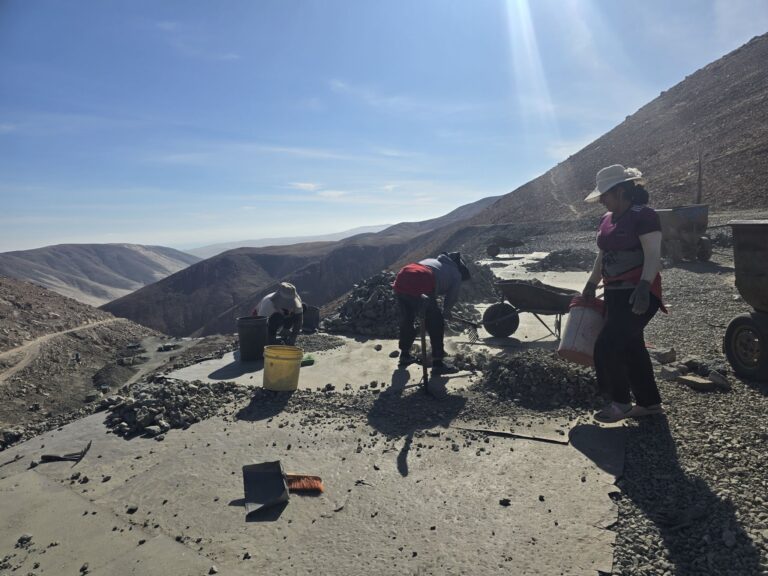
Vermeer: “The project’s focus isn’t on large-scale mining, but on artisanal, small-scale mines. However, the people who work there—more than 200,000 nationwide—are dependent on those large companies. They can’t always sell the material they extract directly and can only sell it to those industrial concerns. They often don’t pay enough, leaving the small-scale mines with little money to invest in things like employee safety.”
And the living and working conditions?
Appiah: “The houses are far below par, there’s no electricity or plumbing, and children don’t go to school. The work is dangerous, unhealthy, and hard. For example, the women manually separate the ore. There’s no child labor, as far as we saw. But we did see them playing unsupervised along the deep cliffs of the mines, which was very disturbing.”
And the environmental impact?
Vermeer: “Everyone is responsible for what happens in the renewable energy sector’s supply chains. If we don’t want an impact like this, we all need to take action together. It would therefore be great if more companies joined this project or the Agreement.”
Appiah: “We recently had conversations with several major cable manufacturers. They were only looking into with the origin of the copper they source, and were largely unaware of what’s happening in mines like those in Peru, and in countries like Chile and Congo, where the situation is obviously similar. They indicated they appreciate that end users like Sunrock are asking questions about the origin of raw materials and the associated human rights and environmental conditions. It all starts with a good conversation; that’s the first step.”
You can read the original article (in Dutch) here. Full credits to Solar Magazine.
Navigating Regulations
GRESB, NECP, EPBD… Owners of large commercial properties face numerous new regulations and agencies measuring sustainability performance to achieve climate neutrality by 2050. At Sunrock, we offer our knowledge and expertise to help shape decisions for future ambitions. Kahya Engler, former Technical Lead M&A and Strategy at Sunrock, emphasised how crucial knowledge of the subject is: “Policy can be the driving force or the downfall of a company. It’s a strange paradox.”
The Importance of Collaboration
“Sunrock’s strategy department must constantly anticipate changes in regulations,” Kahya explains. In the Netherlands, Sunrock is an active member of Holland Solar. They provide strong support in political networking, visibility, and staying up-to-date with quality and safety standards in the industry. “This way, our clients receive all the important information.” Kahya Engler believes the energy transition can only succeed through collaboration, even within the sector itself.
“You need to be able to rise above your own interests for the common good and talk to competitors to really move forward. At SolarPower Europe, the trade association for the European solar power sector, of which Sunrock is also a member, we exchange industry information and jointly lobby for topics that support our mission to provide our clients with clean energy. We discuss the future of the flexible energy market and what’s needed, such as the development of energy hubs.”
The Starting Point
What can energy-intensive companies do to make their production processes more sustainable? Making large-scale energy projects manageable through standardisation and understanding regulations is crucial. According to Kahya, more than 10,000 companies in the Netherlands are waiting for an upgrade to their electricity connection. “Support from Sunrock’s Clean Energy Solutions provides these companies a huge opportunity to optimise energy use behind the meter. That means energy consumption within a company before it is passed on to the network. This is especially important for both industrial companies with high energy intensity and logistics real estate where a significant increase in energy consumption is expected due to the expansion of electric transport.”
“We help them not only to generate energy but also to manage their energy consumption smartly. This ensures continuity of daily operations. We look at flexible solutions for companies to be effective in their energy consumption in the future. This way, they can operate within the available grid capacity, even if electrification increases. When you use the energy you generate, for example with solar panels, directly in production, it also counts as energy saving according to the National Energy and Climate Plan (NECP).”
The Real Energy Balance
Industry and government must work together to remain forward-looking and create room for solutions. This remains a combination of decentralised and centralised energy policies to continue encouraging companies to invest in sustainable energy. Kahya stresses that standardisation of policy is truly needed in this context. “It requires both technical and legal consistency so that both small and large companies can participate equally.”
According to Kahya, this is necessary to properly establish energy hubs, where multiple companies share their energy supply. She cites Canada as an example, where national EPC contract standards significantly improved project efficiency. “Once you have a certain degree of standardisation, your supply chain is also simpler. Once you have an easy supply chain, you have more time to make the processes transparent. Then the circle is complete.”
Want to know more about the strategic approach to your energy policy? Contact our team today. Daan Terlingen: d.terlingen@sunrock.com
In today’s world, where ESG (Environmental, Social, Governance) compliance is so important, integrating solar energy into your operations can significantly enhance sustainability ratings. But what role does rooftop solar play in scoring big on global ESG frameworks, labels and standards? In this blog, we explore the significance of green certifications like GRESB, BREEAM, CRREM, and DGNB across Europe, as well as the CSRD and SFDR guidelines. We’ll also highlight their importance for owners of logistical and industrial real estate, and discuss how Sunrock’s solar solutions help meet these standards.
Let’s get started!
Understanding ESG frameworks
ESG frameworks and labels are guidelines that help businesses measure and disclose their environmental, social, and governance performance to both regulatory bodies and investors, thus showcasing a company’s commitment to sustainability. These various schemes are continuously evolving, becoming more stringent to align with changing global sustainability goals. At Sunrock we partner with our clients to ensure they can stay ahead of these changes, meeting investor and tenant expectations more effectively. With many countries mandating ESG reporting, compliance is essential to remain competitive and sustainable.
Solar energy: A boost to ESG scores
Sourcing solar energy is a clear-cut way to effectively and rapidly meet ESG goals. By integrating integrated solar solutions, businesses can reduce greenhouse gas emissions, lower energy costs, and achieve higher sustainability scores. Solar energy significantly cuts down carbon emissions and offers long-term financial benefits by reducing electricity bills and enhancing property value. As a result, properties with solar installations often command higher market values.
Green certifications and solar energy
Let’s explore how integrating solar on your site directly helps you to perform better on these various frameworks and standards.
GRESB and CRREM
BREEAM and DGNB
CSRD and SFDR Compliance
Sunrock’s Solar Solutions to Boost Your ESG
Local Energy Offtake and Virtual PPAs
Sunrock emphasises local energy offtake and virtual Power Purchase Agreements (PPAs) to optimise energy usage and sustainability scores. Focusing on production/consumption parity, solar production and local consumption drive efficiency and compliance with sustainability goals. Sunrock’s tailor-made strategies are directly aligned with client objectives, thereby enhancing ESG performance.
Next Energy Solutions
Sunrock provides integrated energy solutions to meet future electricity needs and ensure smart energy management. These solutions, including a smart energy management system, battery energy and storage systems (BESS), and EV charging capabilities, aim to future-proof real estate and move operations towards net-zero emissions. These innovations enable efficient use of produced energy, aligning with evolving labels and certifications.
Solar Success in Action
“In the rapidly evolving landscape of ESG standards, Sunrock is transforming client challenges into opportunities. Our integrated solar solutions effectively meet these various requirements and empower owners of logistical and industrial real estate to boost their sustainability credentials and raise their portfolio value in a sustainable way,” explains Daan Terlingen, Senior Business Developer at Sunrock
Exceeding ESG with Solar
Investing in clean energy systems is clearly and most importantly beneficial for the planet. It’s also a strategic business move that enhances your property’s value and helps you comply with tough environmental regulations. By aligning with ESG frameworks and certifications like GRESB, BREEAM, CRREM, and DGNB, you can demonstrate your commitment to sustainability, attract investors and tenants, and comply with government mandates. Sunrock makes it easier to integrate renewable energy into your logistical and industrial real estate, helping you achieve your ESG goals and become an industry leader as a net-zero carbon powerhouse.
Ready to take the next step toward a sustainable future? Partner with Sunrock and transform your property with integrated clean energy solutions.
At Sunrock, our mission is straightforward: to lead Europe’s rooftop PV systems market. Achieving this goal requires a sharp focus on client satisfaction, quality and safety. From scaling heights to managing voltages and averting fire hazards, we’re acutely aware of the risks inherent in our projects.
As Sunrock’s QHSE Manager, I work closely with our teams and partners to implement safety protocols that prioritise the well-being of all stakeholders. For us, safety isn’t just a box to check—it’s woven into the fabric of our operations. Every Sunrock team member, alongside our esteemed clients and dependable partners, plays a key role in upholding our safety standards. In this blog, I’ll walk you through the values, stakeholders and protocols that define our approach to Safety at Sunrock, emphasising our commitment to continual improvement.
Our Values and Procedures
Trust is fundamental to Sunrock—trust between us and our clients, and trust in the reliability of our operations. We adhere to the highest safety standards, following both local and international regulations while fostering open communication and collaboration with our partners. Regular evaluations and continuous improvement efforts underscore our proactive approach to safety, ensuring that we strive to be at the forefront of industry best practices while keeping an open approach to constant learning and adapting from our experiences.
Working with People and Materials
Our commitment to safety extends to our partnerships with contractors and suppliers, chosen for their proven track records and expertise. We emphasise collaborative growth and knowledge-sharing, particularly in areas like safety and environmental responsibility. Audits and checks verify compliance, and we prioritise the use of fire-resistant materials while ensuring our staff and contractors have proper protective equipment. Through training programs and supervision, we prepare our personnel and partners to navigate safety challenges effectively. Our Moerdijk project below illustrates how we collaborated with fire authorities and other stakeholders to ensure all safety considerations were addressed at a site containing hazardous materials.
Our Experience and Learnings
Securing ISO certification has been a pivotal milestone for Sunrock, underscoring our commitment to quality management and environmental stewardship. By implementing ISO 9001 and ISO 14001 standards, we’ve established robust frameworks for continuous improvement. ISO 9001 ensures we document our processes, gather feedback, and regularly evaluate and enhance our operations. Similarly, ISO 14001 focuses on minimising our negative environmental impact, guiding our choices in supplier selection and materials usage, even in our office spaces. These internationally recognised standards are audited annually by external parties, instilling confidence in our partners and clients that our processes are reliable and aligned with global best practices. For more information about our certifications and standards, check out our ESG policy.
Sunrock has gained valuable experience over the years, refining both internal and external best practices. We’ve transitioned to a collaborative approach, establishing task forces for major incidents and bolstering proactive measures through additional inspections. This approach enables us to preemptively identify and address potential issues, continuously evaluating project risks to prioritise prevention of incidents.
Striving for Safety Excellence
Safety is non-negotiable at Sunrock, and we are constantly applying our learnings and feedback to do better and better, year after year. We aim to ensure the safety and satisfaction of everyone involved in our projects. As we continue to innovate, learn and evolve, safety will continue to remain at the forefront of our operations.
We value feedback from our partners and stakeholders. Your insights are critical in helping us maintain our commitment to excellence and safety across all our projects. If you have any observations, suggestions, or feedback regarding safety or any other aspect of our projects, please don’t hesitate to reach out to your Sunrock contacts. Together, we can ensure continuous improvement and uphold the highest safety standards.

Insight written by
Jessica Jonker - QHSE Manager
Sunrock collaborates with a diverse range of partners across our processes. In terms of ESG impact, our most significant suppliers are Engineering, Procurement and Construction (EPC) partners, as well as Operations and Maintenance (O&M) partners. Sunrock has long-term, transparent relationships with our EPC partners based on turnkey project agreements, with these EPC partners being fully responsible for the entire installation of the PV (photovoltaic) project. This also includes the procurement of all goods needed to realise the project. We have also strengthened our relationships with the manufacturers of components needed for PV systems, including solar panel manufacturers, as well as mounting system and battery energy storage system suppliers. All partners who supply us directly are required to sign our supply chain Code of Conduct, committing to ethical practices. We also encourage them to further implement these standards in their own supply chains.
In addition to making our operations more sustainable in Europe, we are also working on increasing our visibility and transparency even further. Customers and stakeholders want to know where their products come from; if they are responsibly sourced, and have been produced under fair conditions. For this reason, Sunrock is the first European solar company to have joined forces with the platform Open Supply Hub and made information available about our suppliers, including the location of their factories. The platform also contains available data on the indirect suppliers in the subsequent tiers of our PV value chain. The goal is to allow workers and other stakeholders in the supply chain to reach out if they identify human rights and environmental issues with one of our direct or indirect suppliers.
Many of the ESG challenges in our supply chain are too complex for a single company to tackle alone. That is why sectoral-level collaboration is essential to our supply chain transparency and accountability programme. We actively participate in the multistakeholder International Responsible Business Conduct Agreement for the Renewable Energy Sector and the Solar Stewardship Initiative. Through these initiatives, we work with different stakeholders – including NGOs, the Dutch government and competitors – to conduct independent audits at the manufacturing sites of our component suppliers. We also envision working together to implement positive impact projects on the ground in metal and mineral-producing countries. With these collaborations we learn and share good practices but also amplify the positive impact we have on people and the environment throughout our value chain.
In order to ensure a successful transition to a more just and sustainable future, the solar industry must take proactive steps to provide stakeholders with detailed information on its ESG maturity, progress and aspirations. This information will enable them to hold us collectively accountable, and challenge us all to become better if we fall short of expectations. After all, a just transition is not just about sharing information, but activating it as a source of dialogue and collaboration towards a more equitable and sustainable future for all.
Want to get the full scope of insights, information, statistics and stories behind our ESG efforts and ambitions? Download our ESG report below.

Insight written by
Manuella Appiah
How can we generate new insights about the solar journey, so we can implement new and better ways to maximise impact? One powerful way is to collect and exchange data and information with our clients and partners. With our collective knowledge of facts and opportunities, we can work together to take better-informed action.
Corneline Sijtsema, product owner at Sunrock, explains how Sunrock’s Insights Portal helps to meet customers’ evolving needs.
In our rapidly evolving world, the digitalisation of all our operations is expanding at light speed. The variety of energy products and services will continue to grow. And operational contexts are becoming richer in technologies and interconnections. How can we keep an overview of what is going on with all these complex processes and data?
Sunrock’s Insights Portal facilitates our clients throughout all the steps in the process: from the feasibility phase to operational solar installations. The portal, in addition to our traditional communication channels, is a crucial hub. It will become increasingly essential for keeping information simple, effective and targeted to our customers’ and partners’ needs and queries.
Hearing the call
Sunrock believes in meeting customer needs and delivering top-quality service. Our customers told us they needed more transparency in their solar journey. The Sunrock Insights Portal enhances communication and provides visualised project and pan-European operational solar overviews. It also offers Energy Production information and ESG statistics, and delivers responses to customer inquiries.
The portal acts as a one-stop solution, enabling customers to track project planning, monitor PV system performance, access account information and find answers to frequently asked questions. It also offers project planning assistance, geographical maps of solar installations and CO2 and reduction impact metrics. While rolling out the solution, we have already received positive feedback from our clients.
Only by embracing a digital-first approach can we become truly future-proof and cater to customer needs effectively. Through the Insights Portal, which is accessible 24/7, we provide a wealth of knowledge and resources that helps customers understand their solar energy requirements. By making informed decisions, customers take charge of their solar energy needs. When needed, they can partner with us for additional requests or requirements on tailor-made energy storage or energy management systems.
Showcasing our expertise and building a clean energy future together with our customers enables us to build trust and demonstrate our commitment to their success. This approach significantly reduces response times, increases customer satisfaction and fosters lasting relationships.
Advanced Insights
The Insights Portal, available to all our real estate partners in Europe, now offers enhanced functionalities tailored to meet the needs of both property owners and their tenants. Tenants in the Netherlands can now access specific information related to the PV park they lease from Sunrock, empowering them with valuable insights into the park’s solar energy production and contribution to sustainability efforts. We’re also in the process of extending this capability to tenants in Germany.
In addition, our other latest feature allows users to seamlessly visualise and download historical production data, providing stakeholders such as sustainability and asset managers with valuable tools for reporting and analysis. Users have the ability to export their production data in CSV format, facilitating easy data analysis and integration with external tools. These enhancements – along with other ongoing UX improvements, bug fixes, and upgraded notifications and search functionalities – reflect our commitment to continuously deliver greater value to all of our users.
The Insights Portal is already available in English, Dutch, German and now French. It’s the first mile of a long journey, during which Sunrock and our clients and partners will meet and build a better future together.
Get started today
For me, it’s really exciting to continue bringing the portal to life and add even more value for real estate owners and tenants. We find it important to maintain excellent contact with our customers about the portal and hear their feedback. So, get in touch with your Sunrock point of contact for a demo, to provide feedback or to set up your tailored dashboard and embark on a seamless solar journey toward a brighter tomorrow.

Insight written by
Corneline Sijtsema
I am particularly proud of another focus group in which we participate: the lifecycle quality workstream group, which is responsible for Solar Power Europe’s Best Practice Guide. This group consists of several PV experts from around Europe, who create the highest quality standards for the design, construction, and maintenance of PV systems and capture these standards in public guides. At Sunrock, we recently used this industry-leading guide as a basis for a Request for Proposal for Operations & Maintenance services for a capacity of 200 MWp of our assets.
Solar Power Europe is not the only important relationship we are fostering as part of our collaborative strategy. Since 2021, we have been active on the topic of PV systems on buildings within the Bundesverband Solarwirtschaft (BSW Solar), the industry association in Germany. Our engagement within the working group on a public survey in the county of North Rhine-Westphalia had a direct effect leading to the reduction of the distance between PV panels and the fire wall, meaning more PV on our clients’ roofs! Now, at Solar Power Europe, this work is being picked up to influence policy advice at the EU level.
Being part of associations like Solar Power Europe, BSW, Holland Solar and Afilog has become invaluable for the Strategy team at Sunrock, enabling us to serve our mission, clients and partners better. For me, it is highly satisfying work to see a policy come into fruition, especially when the direct impact is more PV panels on roofs! Being part of the Strategy team gives me the opportunity to contribute to the acceleration of the entire industry, one partnership at a time.
Insight written by
Kahya Engler
Producing the ESG report was certainly a team effort. More than 20 Sunrock colleagues contributed to the report with insights, information, statistics, and stories that show the depth and breadth of our ESG efforts and ambitions.
I encourage you to download our report to learn more. But, perhaps more importantly, I invite our clients, suppliers, and all stakeholders to join forces with us to ensure that the energy transition is a just one – for everyone.